


Unlocking Water’s Secrets: Memory and Consciousness
- Glenn Coggeshell
- Mar 26, 2025
- 8 min read
The Mystery of Water, Memory, and Life
By Glenn Coggeshell III/Malachi/The Artist ONE
Water, the very essence of life, has long been a subject of intrigue and mystery. Science has explored its molecular properties, while ancient traditions have revered it as sacred. But what if water is more than just a substance that sustains us? What if water itself holds the key to memory, perception, and even consciousness?
Does Water Store Memory?
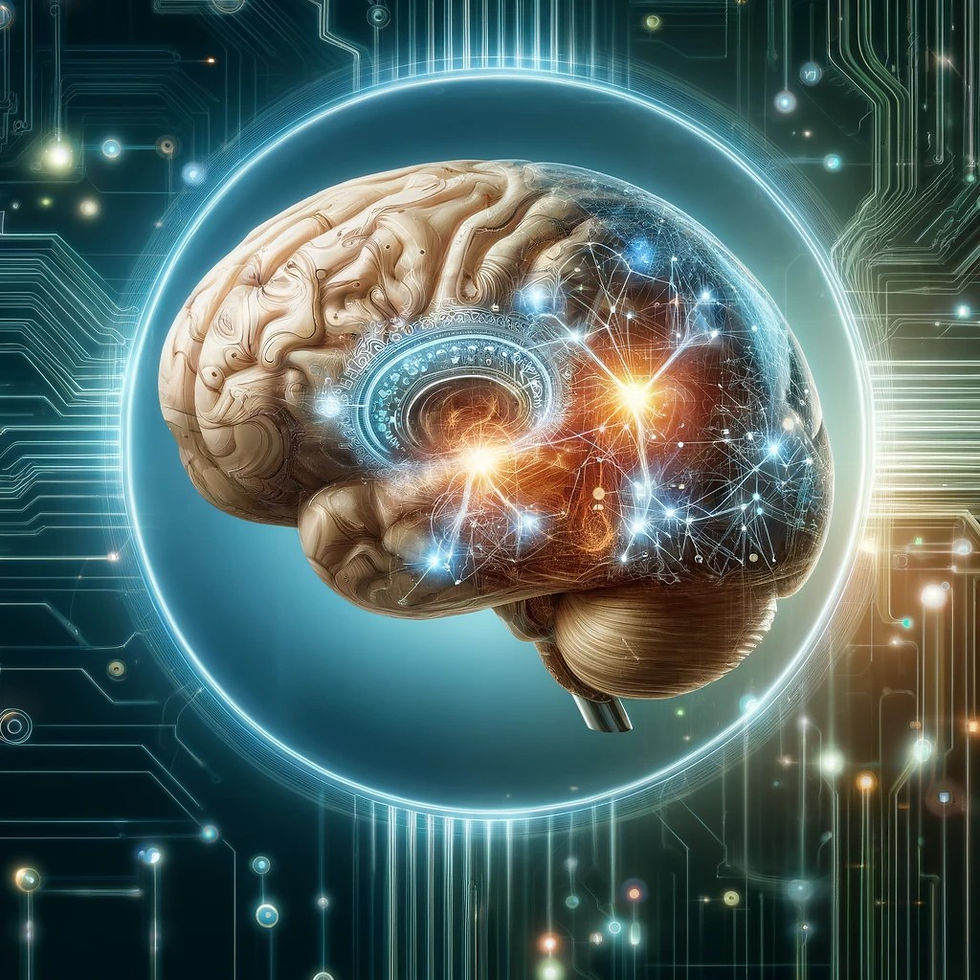
In theoretical discussions and fringe scientific explorations, water has been suggested to have the ability to store information. If this is true, then we must ask: does our brain store memory, or does the water within the cavity of our skull store it? Our brains are surrounded by cerebrospinal fluid, a water-based solution that cushions and nourishes the brain. Could this fluid be more than just a protective medium? Could it serve as a biological recording system, storing impressions of thoughts, experiences, and emotions?
Water, Electricity, and the Brain
Water is a powerful conductor of electricity, as seen in nature through lightning storms, ocean currents, and electromagnetic phenomena. Our brains rely on electrical impulses to transmit information between neurons, and this process is facilitated by the water within and around our brain cells. The cerebrospinal fluid not only protects the brain but may also play an active role in electrical conductivity, enabling thought processes and memory storage in ways we have yet to fully understand. Could the brain’s electrical activity be harmonized with the water it is immersed in, creating a dynamic system that transcends mere biological mechanics?
Do Our Eyes See, or Does Water See?
If water can store images, then how do our eyes truly function? Our eyes contain a significant amount of fluid, and light passes through these watery layers before forming an image on the retina. Is it possible that water within our eyes retains a copy of everything we see? If this theory holds weight, then perception could be more than just a mechanical process; it could be an interaction between consciousness and water’s ability to record visual stimuli.
Does Water Allow Us to Hear?
From all we see to all we hear, water is an essential medium in our perception of the world. Sound travels faster through water than it does through air, and water molecules are present even in the air we breathe. Could it be that our ability to hear is intrinsically connected to the presence of water? Without water, vibrations may not transmit in the same way, potentially making hearing impossible. If water is a fundamental medium for carrying sound waves, then perhaps our perception of sound is, at its core, an interaction between water and consciousness. Does water not only store images but also preserve the echoes of all that has ever been spoken?
If water is part of the air we breathe, could it be that we hear because of the presence of water itself? Without it, would sound waves fail to carry? In this sense, water is not only the sustainer of life but the very element that enables perception itself. Just as light is necessary for vision, could water be the unseen force that makes hearing possible? If sound waves travel through the water in our environment, then are we truly hearing with our ears, or is it the water within us that perceives the sound?
The Role of Salt in Water and Life
Water alone does not conduct electricity efficiently—salt plays a crucial role in enabling conductivity. Our bodies require salt for nerve function, muscle contraction, and overall cellular communication. Tears, which are composed of water and salt, serve a dual function of both emotional expression and biological regulation. Could our production of tears be more than a simple reaction? Could it be a means of discharging electrical energy or even transferring stored emotional and experiential data? Just as the sea relies on salt to sustain its lifeforms and conduct currents, so too does the human body require a delicate balance of salt and water to function optimally.
If tears are an expression of deep emotion, could the vast salty seas of the world be an echo of divine sorrow? Perhaps the oceans themselves are the tears of God, a cosmic expression of creation’s triumphs and tragedies, holding within them the memory of the divine weeping for the world.
Is Water the Source of Life’s Intelligence?
Water is often referred to as the giver of life. Every biological function within us—from the pumping of blood to the generation of new cells—relies on water. Could it be that we are alive not merely due to our physical bodies, but because water carries the very information that animates us? If water contains stored knowledge, could this information be what dictates the organization and function of our cells? Blood, which is largely water, is responsible for circulating nutrients and information throughout the body.
If water is the source of all life, could it be that God Himself is the Water of Life? Just as water sustains and nourishes all living things, could the divine presence flow through all creation like an eternal, life-giving river? And if water represents God, then could blood—the force that sustains human life—symbolize Christ, the connection between the divine and mankind? Blood carries oxygen and nutrients to the body, just as Christ brings spiritual nourishment and salvation. Could it be that the very structure of life itself is a reflection of this divine connection?
In Christian belief, Christ’s sacrifice is often associated with the shedding of blood for humanity’s redemption. Blood, being mostly water, serves as the essential fluid that connects life to its source. If God is the Water of Life, then Christ, as the blood, becomes the bridge linking the divine to humanity—flowing through existence itself, uniting the spiritual with the physical. Just as blood sustains the body, Christ’s presence sustains the soul, forming an eternal cycle of renewal and salvation. Water is often referred to as the giver of life. Every biological function within us—from the pumping of blood to the generation of new cells—relies on water. Could it be that we are alive not merely due to our physical bodies, but because water carries the very information that animates us? If water contains stored knowledge, could this information be what dictates the organization and function of our cells? Blood, which is largely water, is responsible for circulating nutrients and information throughout the body. What if the heart does not generate life, but merely acts as a conduit for the intelligence stored within water?
Is Earth’s Water the Same Water from Genesis?
The opening verses of Genesis describe the waters that existed before creation itself: “And the earth was without form, and void; and darkness was upon the face of the deep. And the Spirit of God moved upon the face of the waters.” (Genesis 1:2). If water holds memory, could it be possible that the waters on Earth today are the same waters from the beginning of time, carrying the echoes of creation itself? Water cycles through the earth, evaporates, condenses, and falls again as rain. But what if it also retains the memory of everything it has encountered? Could water be the timeless witness to all of history, carrying within it the blueprint of existence?
Can Man Create Water?
Although man cannot create water in a way that replenishes nature, societies have still sought to control it through laws. Maritime law and water laws govern the way people interact with persons and governments, yet how can one claim ownership over something or someone that was never created by man? If water is the essence of life and carries the history of existence, does any authority truly have the right to regulate and restrict access to it or what comes from it? Perhaps, rather than possessing water, humanity is merely a steward of this ancient, intelligent force. Water is often seen as an elemental force beyond human creation. While scientists have successfully synthesized water by combining hydrogen and oxygen under controlled conditions, this process requires immense energy and does not naturally replenish Earth’s water supply. If water is truly a vessel of memory and life, then does artificially created water carry the same properties as naturally occurring water? Or is there something unique about the water that has cycled through the Earth since the dawn of time?
Water, Sound, and the Hidden Language of Creation
If there were no water, there would be no sound. This is not only physical truth—it’s spiritual truth. Sound requires a medium. It must travel through something. And the most powerful medium in creation is water.
Science shows us that:
Sound moves faster in water than in air
Sound travels farther in water without losing power
Water acts as an amplifier, strengthening vibrations
Without moisture in the air, our ears could not perceive sound at all
Inside the human ear is fluid, and without that fluid, hearing fails
This means every word ever spoken… every whisper… every cry… every song… travels on water.
And Scripture already told us:
“And the Spirit of God moved upon the face of the waters.” — Genesis 1:2, KJV
Before God spoke “Let there be light” (Genesis 1:3), the waters were already there—waiting to carry the very vibration of God’s voice.
Water Amplifies the Voice of God
If water amplifies sound, then the very first “sound” ever released—God’s voice—was amplified through the waters.
When Jesus spoke to the multitudes, He often stood near the Sea of Galilee, where the water would amplify His voice naturally across great distances. Even the natural world obeyed the spiritual truth: water carries the Word.
Jesus said:
“He that hath ears to hear, let him hear.” — Matthew 11:15, KJV
But ears cannot hear unless there is water.
It is as if God designed creation so that His Word must travel through His water, both physically and spiritually.
Water Bends Light and Shapes Perception
Not only is sound dependent on water, light is too.
Water bends light, refracting it, altering its path, revealing what is hidden, and concealing what is seen. This is why objects look bent or shifted when placed underwater. This is why the horizon changes with moisture. This is why the sky glows.
Even our eyes depend on water:
The cornea is 78% water
The lens requires fluid to bend light correctly
Tears contain salt—the same salt found in the seas
Inside the eye, light is flipped upside down, then corrected by the brain
Perception itself—how we see reality—depends on water’s ability to bend and transform light.
Just as the waters above and the waters below were separated in Genesis:
“And God made the firmament, and divided the waters which were under the firmament from the waters which were above the firmament.” — Genesis 1:7, KJV
So too are our eyes filled with waters above and waters below, bending light so we may see.
Sight Is Water Interpreting Light
Your eyes do not see light directly— They interpret the bending of light as it passes through water.
Your ears do not hear sound directly— they interpret the vibration of water.
Your lungs cannot breathe without moisture— even the air carries water vapor, or else life collapses.
Life, perception, sound, sight—all of it relies on the waters above and the waters below.
Air Is Water, Water Is Life
The air we breathe contains water vapor. Even in a desert, air is never without water. Without that vapor:
sound would not travel
lungs could not function
blood could not oxygenate
life would stop instantly
We live inside a world where:
Water fills the seas
Water fills the sky (clouds, vapor, moisture)
Water fills the body
Water fills the brain
Water fills the eyes
Water fills the blood
From every direction, water surrounds us—above and below—just as Genesis described.
Maybe this is why Jesus said…
“If any man thirst, let him come unto me, and drink.” — John 7:37, KJV
And why Revelation declares:
“And he shewed me a pure river of water of life, clear as crystal, proceeding out of the throne of God and of the Lamb.” — Revelation 22:1, KJV
The physical mirrors the spiritual. The natural reveals the supernatural.
Sound lives through water. Light bends through water. Life flows through water. Spirit moves upon water.
From the beginning to the end, water testifies of its Maker.
Conclusion: The Infinite Intelligence of Water
As we continue to explore the mysteries of consciousness, life, and existence, water stands as a profound and enigmatic force. Whether through scientific discovery or philosophical contemplation, we may one day uncover the truth about water’s role in storing memory, perceiving reality, and sustaining life itself. Until then, we remain surrounded by a vast, flowing intelligence—one that whispers the secrets of creation in every drop.


Comments